
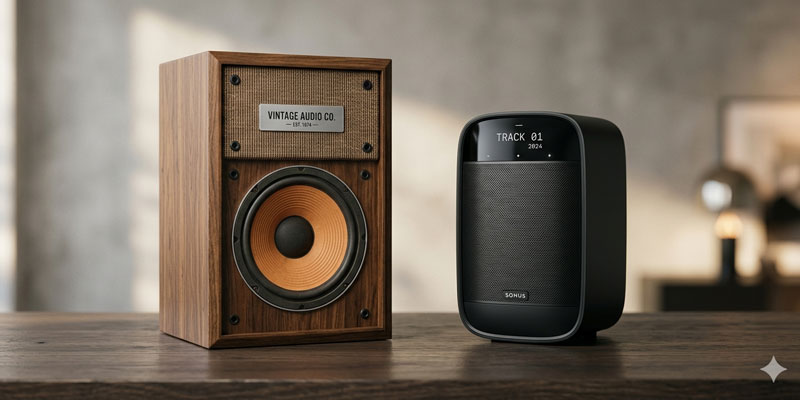
Are you torn between the charm of vintage speakers and the sleek power of modern ones? Choosing the right speaker can transform your listening experience, but with so many options, it’s easy to feel overwhelmed.
You might wonder if those classic, old-school speakers still hold their own against today’s cutting-edge technology. Or maybe you’re curious whether upgrading to modern speakers will truly make a difference in sound quality. You’ll discover the real strengths and weaknesses of vintage versus modern speakers, helping you make a choice that fits your taste, space, and budget.
Keep reading to unlock the secrets that could turn your music sessions into something unforgettable.
Sound Quality Comparison
Sound quality is a key factor when choosing speakers. Comparing vintage and modern speakers reveals clear differences. Each type offers unique audio experiences. Understanding these can help you decide which fits your listening style.
Below, we explore how sound quality varies between vintage and modern speakers. We focus on their characteristics, new technologies, and audio performance.
Vintage Speaker Characteristics
Vintage speakers often use larger drivers and wooden cabinets. They produce warm, rich tones with natural midrange sound. Their analog design adds a classic, full-bodied audio feel. Some models emphasize bass and mid frequencies over highs. This gives music a smooth, mellow vibe that many listeners enjoy.
Due to older materials, vintage speakers may show some wear. This can affect sound clarity and consistency. Yet, fans appreciate their nostalgic charm and unique tonal quality.
Modern Speaker Innovations
Modern speakers use advanced materials like neodymium magnets and synthetic cones. They often include digital signal processing for cleaner sound. These speakers deliver precise highs and tight bass. Compact designs fit well in various spaces without losing power.
Manufacturers focus on reducing distortion and improving frequency response. Wireless and smart features add convenience for users. Modern speakers aim for balanced, clear, and detailed audio output.
Audio Performance Differences
Vintage speakers excel at producing warm and smooth sounds. They can feel more natural, especially with older music recordings. However, they might lack clarity in very high or low frequencies.
Modern speakers offer sharper, more accurate sound across all ranges. Their technology reduces noise and enhances detail. This makes them ideal for all music genres and modern audio formats.
Choosing between vintage and modern depends on your sound preference. Warmth and character or clarity and precision. Both styles have loyal fans for different reasons.
Compatibility And Setup
Setting up vintage or modern speakers with your audio system requires attention to compatibility. Proper setup ensures the best sound quality and protects your equipment. Understanding the differences in connection and power needs helps avoid damage and poor performance.
Pairing Vintage Speakers With Modern Systems
Vintage speakers often use older connection types. They usually have bare wire terminals or spring clips. Modern systems mostly use banana plugs or RCA connectors. Adapters can help connect vintage speakers to new receivers. Check that your amplifier supports the speaker’s connection type. Some vintage speakers need extra equipment like a preamp for proper sound.
Many modern amplifiers offer multiple outputs and input options. This flexibility makes it easier to pair with older speakers. Bluetooth and wireless options may require extra adapters for vintage models. Always test the setup at low volume first. It prevents damage while confirming the connection works.
Impedance And Power Handling
Speaker impedance affects how much power the amplifier sends. Vintage speakers often have 8 ohms impedance, but some vary widely. Modern speakers usually have a stable impedance rating. Matching your amplifier’s output with the speaker’s impedance is crucial. Mismatched impedance can cause distortion or damage.
Power handling means how much wattage a speaker can safely take. Vintage speakers might handle less power than modern ones. Using too much power can blow the speaker’s components. Modern speakers often include clear wattage ratings. Always check these numbers before pairing them with an amplifier.
Optimizing Speaker Placement
Proper placement improves sound clarity and balance. Vintage speakers may need more space due to their design. Place them away from walls to reduce bass boom. Modern speakers often include design features that reduce placement sensitivity. Try setting speakers at ear level and angled slightly toward the listening spot.
Form an isosceles triangle between speakers and your seat. This setup helps create a balanced stereo image. Adjust the distance between speakers based on room size. Experiment with toe-in angles to find the best soundstage. Keep obstacles and reflective surfaces in mind to avoid echo and muffled sound.
Value And Longevity
Value and longevity play a key role in choosing between vintage and modern speakers. Many buyers want speakers that last long and keep their value over time. Both vintage and modern models offer unique advantages in these areas. Understanding durability, technology advances, and costs helps in making a smart choice.
Durability Of Vintage Speakers
Vintage speakers often come with sturdy wooden cabinets. These materials resist wear and can last decades. The design focused on strong parts and simple mechanics. Vintage speakers can still work well if cared for properly. Some old models have parts that are easy to replace. This makes them a good choice for long-term use.
Advancements In Modern Technology
Modern speakers use new materials that improve sound quality. Lightweight metals and plastics make them easier to move. Technology like Bluetooth and smart features add convenience. Modern speakers often have better resistance to damage from moisture. Many models use parts that last longer under daily use. These advances boost both performance and lifespan.
Cost And Maintenance Considerations
Vintage speakers may cost more to maintain due to rare parts. Repairs can take time and need special skills. Modern speakers usually require less upkeep and have warranty support. Buying new can save money on repairs. However, vintage speakers can hold value well if kept in good shape. Consider your budget and willingness to maintain before choosing.
FAQs: Vintage Speakers Vs Modern Speakers
Do Vintage Speakers Sound Good?
Vintage speakers deliver warm, rich sound with unique character. They often outperform low-quality modern speakers but lack some clarity and bass depth. Many audiophiles enjoy their nostalgic tonal balance, making them a good choice if well-maintained and matched with proper equipment.
What Is The 83% Rule For Speakers?
The 83% rule for speakers means placing the listener 83% of the tweeter-to-tweeter distance away. This setup enhances sound imaging and clarity by optimizing speaker-listener alignment. Adjust placement based on room acoustics for the best audio experience.
Are Speakers Better Now Than In The Past?
Speakers today deliver clearer, more accurate sound with advanced technology and materials. Modern designs offer better power, efficiency, and durability. Vintage speakers have charm but lack the precision and features of current models. Overall, modern speakers outperform older ones in sound quality and reliability.
Conclusion
Choosing between vintage and modern speakers depends on your sound taste. Vintage models offer warm, rich tones with classic charm. Modern speakers deliver clear, precise audio with advanced features. Both types have unique strengths and weaknesses. Your listening space and music style also matter.
Experiment to find which sound fits you best. Enjoy music your way, whether old or new.