
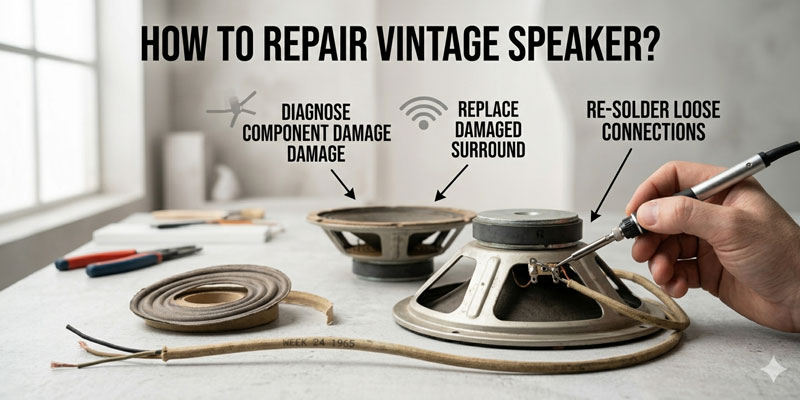
Do you have a vintage speaker that’s lost its sparkle? Before you think about replacing it, consider this: many classic speakers can be brought back to life with a few simple repairs.
Imagine enjoying that rich, warm sound again—right from your own home. Whether it’s a torn cone, a worn-out foam surround, or a rattling voice coil, you can fix these common issues without spending a fortune. In this guide, you’ll discover easy, step-by-step methods to repair your vintage speaker and restore its original glory.
Keep reading to unlock the secrets that will save your prized audio gear and make your music sound better than ever.
Assessing Speaker Damage
Repairing a vintage speaker requires patience and care. The process involves several precise steps. Each step helps restore sound quality and extend the speaker’s life. Follow these instructions carefully to bring your old speaker back to life.
Removing The Speaker Cone
Start by disconnecting the speaker wires gently. Use a screwdriver to remove the screws holding the speaker cone. Lift the cone carefully to avoid damage. Note how the cone is attached to the frame. Keep all screws and parts safe for reassembly.
Replacing Foam Surrounds
Old foam surrounds often crack and crumble. Remove the damaged foam completely. Clean the edges of the cone and frame with a soft cloth. Apply new foam surrounds using speaker glue or adhesive. Press firmly and let it dry for several hours before use.
Fixing Tears And Holes
Tears and holes reduce sound quality and cause distortion. Use a thin layer of flexible glue to seal small tears. For larger holes, place a patch of thin paper or fabric over the area. Apply glue around the patch edges carefully. Allow the repair to dry fully before testing the speaker.
FAQs: How to Repair a Vintage Speaker?
How To Repair An Old Speaker?
Inspect the speaker for damage, such as torn cones or loose wires. Replace foam surrounds if needed. Re-solder connections carefully. Clean dust and debris from components. Test sound quality after repairs to ensure functionality.
What Is The 83% Rule For Speakers?
The 83% rule guides speaker placement by setting listener distance at 83% of the distance between speakers. It enhances sound clarity and imaging. This ratio creates a balanced soundstage with accurate time alignment, improving musical engagement. Adjust it based on room acoustics and personal preference.
Can A Damaged Speaker Be Repaired?
Yes, damaged speakers can often be repaired. Common fixes include replacing foam surrounds, patching cones, or rewiring connections. Simple DIY repairs suit minor damage, while severe issues may need professional rebuilds. Repairing extends the speaker’s life and restores sound quality effectively.
Conclusion
Repairing vintage speakers can bring old sounds back to life. Take your time and follow each step carefully. Small fixes often improve sound quality greatly. Use proper tools and replace damaged parts with care. Enjoy the satisfaction of restoring your classic audio gear.
Your vintage speaker will soon deliver clear, rich music again. Keep practicing to improve your repair skills. This work protects audio history and saves money, too. Give your speakers a second chance to shine.