
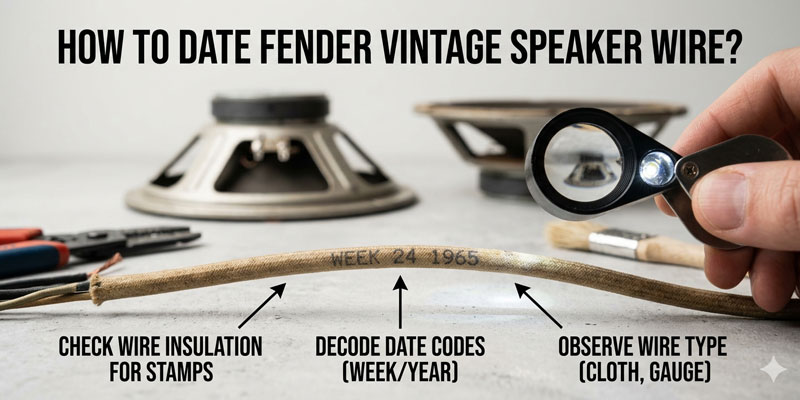
If you’re a fan of vintage Fender gear, you know that every detail matters—including the speaker wire. But how can you tell the age of your Fender vintage speaker wire?
Dating these wires isn’t just about satisfying curiosity; it can help you understand the quality, authenticity, and value of your equipment. In this guide, you’ll learn simple, clear steps to identify and date your Fender vintage speaker wire with confidence.
Keep reading, and you’ll unlock insider tips that bring your vintage collection to life and ensure you get the most from your classic sound setup.
Identifying Fender Vintage Speaker Wire
Identifying Fender vintage speaker wire requires attention to detail. It involves checking markings, materials, and wire types. This helps confirm authenticity and age. Knowing these aspects improves your understanding of vintage audio gear.
Recognizing Wire Markings
Fender vintage speaker wire often has unique markings. Look for printed text along the wire’s length. This text may include the brand name, gauge size, or production date. Some wires also show voltage or temperature ratings. These markings help verify the wire’s origin and age. Faded or worn markings can make identification tricky, but still useful.
Materials And Construction Clues
Vintage Fender wires use specific materials. The outer jacket is usually made from cloth or flexible plastic. Inside, copper strands are common for good conductivity. Older wires may feel stiffer or have a braided design. Modern materials like PVC are rare in vintage types. Checking the wire’s texture and flexibility gives clues about its age and quality.
Common Vintage Wire Types
Fender used several wire types over the years. Two-conductor cloth-covered wire is classic for vintage speakers. Another type is twisted pair wire, which reduces interference. Some vintage wires have a single-strand core, while others use multiple strands. Knowing these common types aids in quick identification. Each style reflects a particular era of Fender production.
Decoding Date Codes And Serial Numbers
Decoding date codes and serial numbers on Fender vintage speaker wire helps you identify its age and origin. These codes hold clues about production dates and manufacturing details. Understanding them guides you in verifying authenticity and value.
Locating Date Codes On Wires
Date codes often appear printed or stamped along the wire’s insulation. Check near the ends or along the length for numbers and letters. Sometimes, codes hide under connectors or labels. Look carefully for small, faded prints.
Interpreting Serial Number Formats
Fender serial numbers follow specific patterns linked to production years. Early models may have simple numeric codes. Later wires include letters indicating factory or month. Knowing these formats helps convert codes into actual dates.
Cross-referencing Fender Production Years
Compare your decoded serial number with Fender’s production year charts. Match letters and numbers to specific years and months. This cross-check confirms the wire’s vintage status. It also helps spot reissues or modern copies.
Expert Tips For Authenticity And Care
Expert tips help ensure authentic Fender vintage speaker wire stays true and lasts long. Knowing how to spot fakes saves money and frustration. Proper handling keeps wires safe and sound. Maintaining performance means better sound from your vintage gear.
Spotting Reproductions And Modifications
Look closely at the wire’s texture and color. Genuine Fender vintage wire has a distinct feel and aged patina. Check the printing on the insulation for clarity and style. Fakes often use modern fonts or sloppy labels.
Inspect the wire ends for original solder or connectors. Modified wires may have fresh solder or non-period parts. Compare your wire to reference photos from trusted vintage sources. Small details help confirm authenticity.
Proper Handling And Storage
Keep your vintage wire away from moisture and direct sunlight. Store it in a cool, dry place to avoid damage. Coil the wire gently without tight bends or kinks. Sharp bends weaken internal strands and reduce lifespan.
Use soft ties or cloth strips to secure coils. Avoid plastic ties that can cut into insulation. Label storage containers clearly to prevent mix-ups. Handle wires with clean hands to avoid oils and dirt.
Maintaining Vintage Wire Performance
Test the wire regularly for continuity and resistance. Clean contacts with a soft cloth and mild cleaner to remove oxidation. Avoid harsh chemicals that damage insulation or wire strands.
Replace damaged connectors with period-correct parts. Keep connections tight, but do not overtighten terminals. Regular care preserves the original tone and reliability of your vintage speaker wire.
FAQs: How to Date a Fender Vintage Speaker Wire?
How Do You Tell The Age Of A Fender?
Check the Fender serial number on the neck plate, headstock, or body. Match it with Fender’s official date charts. Look for date codes on components like pots and speakers for additional clues. Combining these details helps accurately determine the Fender’s production year.
How To Tell Which Speaker Wire Is Which?
Identify speaker wire by color or markings: red or a stripe usually means positive, black or plain indicates negative. Match positive terminals on both the speaker and amplifier. Use a multimeter’s continuity test if wires lack clear markings. Always keep polarity consistent for proper sound quality.
How Do I Decode A Fender Serial Number?
Decode a Fender serial number by checking its location and format. Match it with Fender’s decade-specific charts online. Use neck plate, headstock, or body serials to find the production year accurately.
Conclusion
Dating a Fender vintage speaker wire takes patience and attention. Check serial numbers carefully for clues. Match codes with Fender’s official guides online. Inspect the wire condition to confirm authenticity. Knowing the age helps with restoration and value. Keep records of what you find.
This process makes your vintage gear more special. Enjoy the history behind each piece. Remember, small details matter most in dating vintage wires. Take your time, and the story will unfold.