
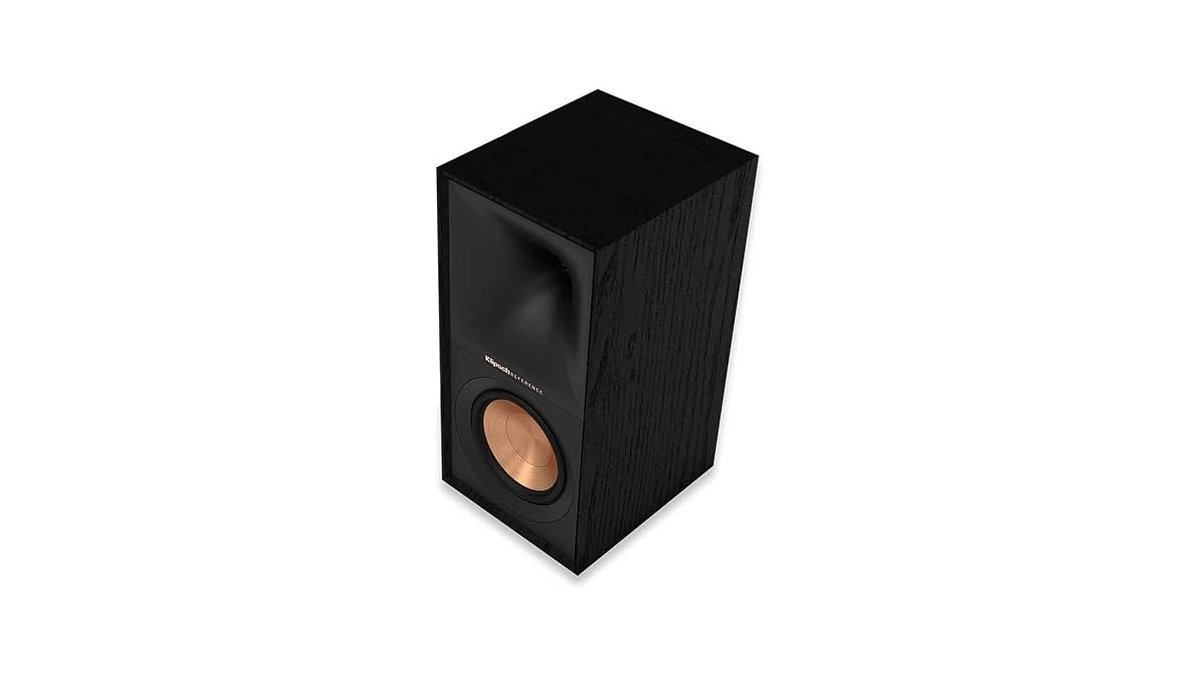
The Klipsch R-50M earns the top spot with its 90° x 90° Tractrix horn and spun-copper woofer built for efficient output. Pairing old amplifiers with modern drivers requires matching physical dimensions and power requirements carefully, so finding the Best Speakers for Vintage Receiver comes down to clean compatibility.
This guide helps vintage audio enthusiasts pick the right passive stereo pair for older hardware. Driver configuration, cabinet design, and stated impedance are the main factors that separate these options.
- Best Overall: Klipsch R-50M — 90° x 90° Tractrix horn directivity.
- Most Detailed Sound: Sony SS-CS5M2 — 3-way driver setup with super tweeter.
- Best Horn-Loaded Design: Klipsch R-51M — 1-inch aluminum LTS tweeter assembly.
- Best Compact Build: Polk Audio T15 — front-oriented dynamic balance driver system.
- Most Versatile Mounting: Polk Audio OWM3 — distinct enclosure with 7 mounting orientations.
- Best Classic Aesthetic: Edifier P12 — wood color finish with included wires.
- Best for Record Players: RIOWOIS Passive Speakers — dual bass reflex ports with gold terminals.
# Product 1 
Klipsch R-50MBest Overall Check Price 2 Sony SS-CS5M2Most Detailed Sound Check Price 3 Klipsch R-51MBest Horn-Loaded Design Check Price 4 Polk Audio T15Best Compact Build Check Price 5 Polk Audio OWM3Most Versatile Mounting Check Price 6 Edifier P12Best Classic Aesthetic Check Price 7 RIOWOIS Passive SpeakersBest for Record Players Check Price
Best Speakers for Vintage Receiver under $500 Reviews
1. Klipsch Reference Next-Generation R-50M Horn-Loaded Bookshelf Speakers
Buy on Amazon
Best for: stereo listeners wanting dynamic, high-efficiency horn sound
The Klipsch R-50M features an updated 90° x 90° Tractrix horn that covers a wider outer surface than older designs. This gives you controlled high-frequency directivity, pointing treble straight toward your listening seat. The linear travel suspension aluminum tweeter sits on Kapton material, which lowers unwanted distortion in the highs.
Beneath the horn, Klipsch fits a 5.25-inch spun-copper thermoformed crystalline polymer cone. The cone uses steeper angling to smooth out the midrange transition and deliver tight, responsive bass notes. Its medium-density fiberboard cabinet is wrapped in textured, scratch-resistant wood grain vinyl with low-profile magnetic grilles.
Against the smaller 4-inch driver on the Edifier P12, this model’s 5.25-inch woofer moves more air for deeper room presence.
Anyone running an amplifier unstable into low loads must verify compatibility, as modern Klipsch speakers draw current differently than vintage models.
2. Sony SS-CS5M2 3-Way 3-Driver Hi-Res Compact Bookshelf Speakers (Pair)
Check Price on Amazon
Best for: listeners seeking layered acoustic detail and wide dispersion
Sony built the SS-CS5M2 as a 3-way, 3-driver bookshelf system inside an unobtrusive cabinet. Having three separate drivers allows each unit to handle a distinct slice of the audio band. Sony pairs a high-precision tweeter for faithful sound with a wide-dispersion super tweeter to create an expansive sound stage.
Low frequencies flow through a 5.12-inch woofer reinforced with cellular cone material. This rigid cone helps keep low notes free from distortion during heavy bass passages. The bass reflex enclosure lets air vent outward to deepen the speaker’s bass presence in smaller spaces.
At 5.12 inches, this main woofer is slightly smaller than the driver found on the Klipsch R-50M.
Listeners wanting simple two-driver sound might find a 3-way crossover network unnecessary for vintage mono records.
Pros:
- 3-way, 3-driver design with dedicated super tweeter
- 5.12-inch woofer with reinforced cellular cone material
- Bass reflex enclosure for low-end reinforcement
- Wide dispersion super tweeter to create an expansive sound stage
- Compact bookshelf footprint suited for smaller shelves
Cons:
- Compact bookshelf design for small spaces, which rules out larger listening areas.
3. Klipsch R-51M Bookshelf Speaker (Pair)
Check Latest Price on Amazon
Best for: medium rooms needing room-filling horn volume
The Klipsch R-51M pairs a 1-inch aluminum LTS tweeter with a classic 90×90 square Tractrix horn. This structure channels treble energy into the listening space without wasting acoustic output on side walls. It works well with low-watt vintage receivers because the horn assembly naturally magnifies high-frequency efficiency.
Lower octaves run through a 5.25-inch spun-copper injection-molded graphite woofer. The rear-firing bass reflex port tunes the low-end performance by releasing air pressure out the back panel. Its cabinet measures 13.3 inches tall by 7 inches wide and 8.5 inches deep.
Measuring with substantial height, this cabinet stands notably larger than the compact height listed for the Polk Audio T15.
Shoppers with tight, shallow bookshelf space will need to plan around its 8.5-inch depth and rear bass port.
Pros:
- 1-inch aluminum LTS tweeter
- 90×90 square Tractrix horn assembly
- 5.25-inch spun-copper IMG woofer
- Rear-firing bass reflex port for added bass response
Cons:
- Measures 13.3 inches high and 8.5 inches deep, taking up significant shelf area
4. Polk Audio T15 100 Watt Home Theater Bookshelf Speakers
Buy on Amazon
Best for: starter stereo setups needing flexible room placement
Polk Audio’s T15 brings balanced sound to smaller spaces using a front-facing acoustic layout. Inside the cabinet, you get a 0.75-inch tweeter matched to a 5.25-inch Dynamic Balance driver. Because it’s rated to take up to 100 watts, it pairs well with modest vintage amplifiers.
Its wall-mountable design allows you to hang it directly against drywall. Clear midrange reproduction makes it just as practical for television dialogue as it’s for vocal-heavy stereo music.
This model features a 0.75-inch tweeter, compared to the larger 1-inch tweeter installed on the Polk Audio OWM3.
Listeners looking for ultra-bright, airy highs might find this smaller 0.75-inch tweeter softer than horn designs.
Pros:
- 5.25-inch Dynamic Balance composite woofer
- 0.75-inch tweeter
- Built-in keyhole wall-mounting slot
- Wall-mountable design allows flexible placement
- Up to 100-watt power handling capability
Cons:
- The 0.75-inch tweeter provides less top-end dispersion than larger multi-tweeter arrays
5. Polk Audio OWM3 Compact Wall & Bookshelf Speakers
Check Price on Amazon
Best for: awkward rooms requiring angled or corner speaker placement
The Polk Audio OWM3 uses a distinct curved shape engineered to fit spaces flat boxes cannot. It supports 7 different mounting setups, including corner joins, angled wall mounts, vertical shelves, and horizontal placements. The white enclosure features paintable grilles, letting you blend the units into your existing wall paint.
Acoustics rely on a 4.5-inch Dynamic Balance mid/woofer alongside a 1-inch tweeter. Polk includes Capacitive Coupling Technology to help the shallow cabinet produce deeper bass with lower distortion. It works comfortably as a primary stereo pair in small rooms or as secondary background channels.
Its 4.5-inch mid-woofer is noticeably smaller than the woofer equipped on the Polk Audio T15.
Bass heavy playback is limited by the compact, curved cabinet shape, ruling out buyers who want pounding sub-bass without extra gear.
Pros:
- 7 unique placement and orientation choices
- Distinct curved cabinet fits tightly into room corners
- 1-inch tweeter for smooth treble
- Paintable front grilles match interior room decor
- Capacitive Coupling Technology for cleaner bass extension
Cons:
- 4.5-inch mid-woofer provides less cone surface area than standard mid-sized bookshelf units
6. Edifier P12 Passive Bookshelf Speaker
Check Latest Price on Amazon
Best for: traditional listening spaces where wood finishes matter
The Edifier P12 brings a vintage furniture look to your desk or living room shelf. Wrapped in a warm wood-grain vinyl, it looks right at home next to brushed aluminum and walnut receiver cases. Edifier fits a built-in wall-mount bracket directly onto the back of each cabinet for easy installation.
Sound reproduction relies on a 2-way system containing a 19mm (3/4-inch) silk dome tweeter and a 4-inch bass driver. A bass reflex port helps enhance low-end bass. It carries a 6-ohm nominal impedance, matching up well with vintage solid-state output stages.
The listing specifies included speaker wires in the box, whereas the RIOWOIS Passive Speakers package excludes connecting wires.
Rooms measuring on the larger side will easily overwhelm the modest output from this 4-inch woofer.
Pros:
- Warm wood-grain cabinet finish matches vintage gear
- Bass reflex port enhances low-end sound
- 19mm silk dome tweeter reproduces smooth upper details
- Built-in wall-mount bracket attached to back panel
- Includes speaker wires inside the retail package
Cons:
- Compact bass driver moves less air in large rooms than 5-inch models
7. RIOWOIS Passive Bookshelf Speakers
Buy on Amazon
Best for: turntable listeners wanting horn-assisted detail on a tight footprint
The RIOWOIS Passive Speakers utilize a specialized silk-dome horn tweeter paired with a 4-inch bass driver. This hybrid tweeter combines the smooth texture of soft fabric with the directional projection of a horn throat. The cabinet uses rounded, hand-sanded edges and integrated dual bass reflex ports on the rear panel.
Connection options are unusually solid here, sporting zinc-alloy terminals with gold plating for steady corrosion resistance. These binding posts accept bare wire, U-type spades, or standard banana plugs from vintage amplifier leads. Foam padding sits on the integrated mounting bracket to suppress unwanted wall vibrations when hung.
This model features a 4-ohm impedance rating, unlike the Edifier P12 which lists a 6-ohm impedance.
Owners of delicate vintage receivers that can only drive 8-ohm loads can’t safely pair this 4-ohm speaker.
Pros:
- Silk-dome horn tweeter enhances vocal clarity and projection
- Gold-plated zinc-alloy terminals fit banana plugs and bare wire
- Furniture-grade enclosure with hand-sanded rounded edges
- Foam-padded rear bracket cuts vibration against walls
- Dual rear-mounted bass reflex ports improve cabinet airflow
Cons:
- Rated at 4 ohms, which stresses vintage amplifiers not rated for low-impedance loads
- Package doesn’t include speaker wires, requiring a separate cable purchase
Also Worth Considering
The Elimavi Passive Bookshelf Speakers offer a walnut finish with a 2-way setup using a 4-inch woofer and 1-inch silk horn tweeter. The Edifier P12 beats it on known cabinet acoustic specs with its tested 6-ohm stability, but the Elimavi remains an option for buyers wanting walnut styling with speaker cables included in the box.
The Saiyin 5″ Woofer Passive Speaker features a 5-inch bass driver, a 20mm silk dome tweeter, and a 40W x 2 power rating at 4 ohms. The Polk Audio T15 offers 100-watt handling, though listeners with 4-ohm stable amplifiers might consider the Saiyin for vocal-focused desktop setups.
How We Chose?
16 Amazon listings were compared on driver dimensions, stated cabinet materials, and rated impedance limits, and near-duplicates — another colour, another size of one already here — were left out. Listings earned inclusion by publishing clear driver dimensions, clear passive operation requirements, and distinct mounting or horn designs. Models were disqualified when specifications lacked clarity regarding passive amplifier requirements or speaker box configurations. Distinctions came down to woofer diameter, horn loading mechanisms, port locations, and impedance figures that affect older amplification circuits.
How to Choose the Right Speakers for a Vintage Receiver?
Amplifier impedance and safe matching
Vintage receivers feature delicate output transistors that run hotter into low impedance loads. The RIOWOIS speakers run at 4 ohms, whereas the Edifier P12 lists 6 ohms. Check your receiver’s back panel markings before selecting 4-ohm models to avoid overheating older equipment.
Horn drivers versus soft dome tweeters
Tweeter design changes how sound disperses into your living space. The Klipsch R-50M and Klipsch R-51M use Tractrix horn loading to boost high-frequency efficiency and keep treble pointed forward. In contrast, the Polk Audio T15 and Edifier P12 rely on silk or composite dome tweeters. Soft domes throw a wider, gentler soundstage that feels less aggressive in small rooms.
Cabinet dimensions and port direction
Speaker bass ports change where cabinets can sit in a room. The Klipsch R-51M measures 8.5 inches deep with a rear port that needs breathing space away from plaster walls. Compact designs like the Polk Audio T15 let you position enclosures easily on book shelving. Measure shelf depth before purchasing larger rear-firing enclosures.
Mounting brackets and room placement
Installing speakers on walls requires dedicated hardware. The Polk Audio OWM3 features 7 distinct mounting orientations built right into its curved structure. Both the Edifier P12 and RIOWOIS speakers provide pre-installed rear metal brackets for direct drywall hanging. Traditional bookshelf boxes like the Klipsch R-50M must sit directly on furniture or aftermarket speaker stands.
FAQs on Best Speakers for Vintage Receiver under $500
Can modern passive speakers damage an old vintage receiver?
Modern speakers can damage an older receiver if their impedance drops below what the amplifier supports. A 4-ohm model like the RIOWOIS Passive Speakers forces output transistors to supply more electrical current than an 8-ohm design. If an old amplifier is only rated for 8-ohm loads, pushing low-impedance speakers at loud volumes can cause thermal failure.
Do I need special wire to hook these speakers to vintage spring clips?
Standard two-conductor copper speaker wire works smoothly with both old spring clips and modern terminals. The Edifier P12 includes wire in the box, while the RIOWOIS Passive Speakers require you to supply your own. If your vintage receiver has spring-loaded push terminals, strip bare wire ends rather than using thick banana plugs.
Why do horn speakers work well with low-watt vintage receivers?
Horn flares mechanically amplify sound waves exiting the driver, yielding higher sound pressure per watt. Models like the Klipsch R-50M and Klipsch R-51M feature Tractrix horns that make the most of modest power supplies. This allows smaller 15-watt to 30-watt vintage receivers to produce loud, dynamic sound without pushing the amplifier into harsh clipping.
How much physical space do rear-ported speakers need from the wall?
Rear-ported speakers need open space behind the cabinet so air can exit freely from the port tube. The Klipsch R-51M and RIOWOIS models vent out the rear, requiring several inches of wall clearance to avoid muddy bass. For wall installations, wall-mountable enclosures like the Polk Audio T15 mount directly on your wall.
What is the difference between a 2-way and 3-way bookshelf speaker?
A 2-way speaker splits audio between a single tweeter and woofer, while a 3-way design divides frequencies among three separate drivers. The Sony SS-CS5M2 uses a 3-way layout with a main woofer, standard tweeter, and super tweeter. Two-way units like the Klipsch R-50M manage sound with fewer crossover components, offering a simpler acoustic path.
The Klipsch R-50M stands out as the top pick for vintage systems thanks to its efficient Tractrix horn and balanced woofer. If you have limited shelf space or want easier wall mounting, the Polk Audio T15 provides a compact, wall-mountable design. Measure your available space and verify your receiver’s impedance rating before setting up your new stereo system.